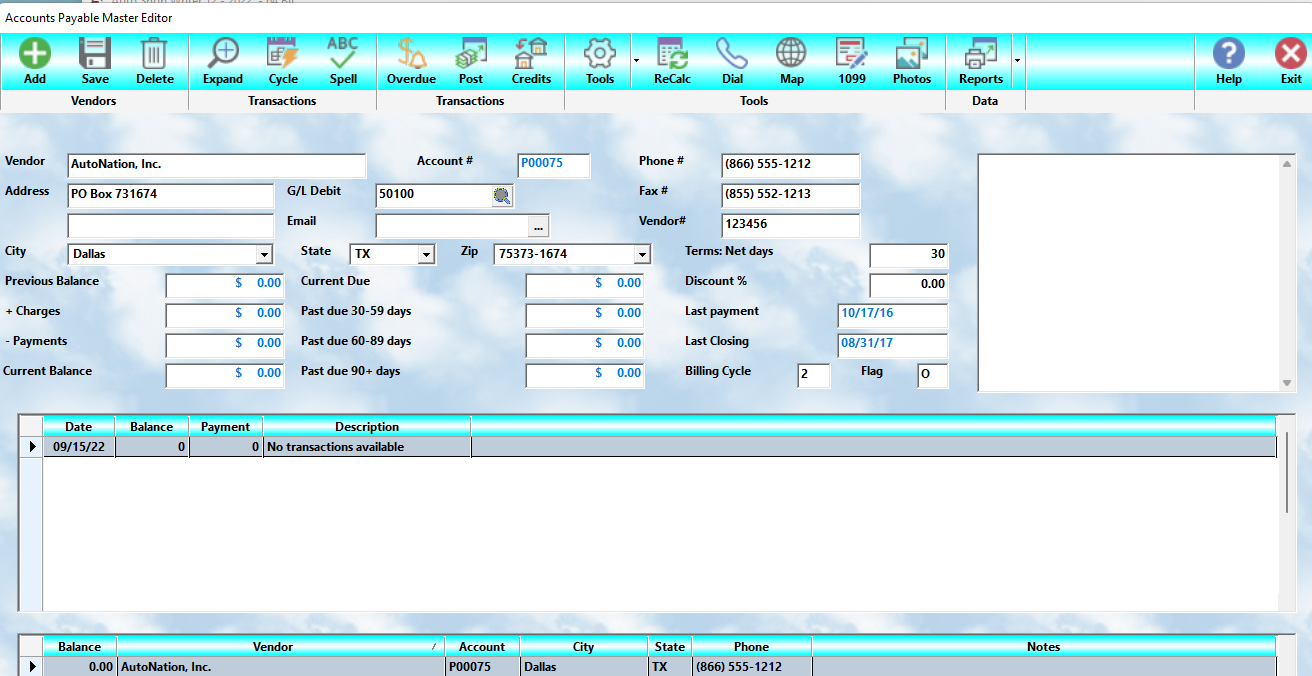
Accounts Payable is the system used to track all financial activity involving your vendors. It is where you manage bills, record vendor invoices, and make payments by check or cash.
Most Accounts Payable activity can be processed directly from the main A/P screen. However, some charges originate automatically from other parts of MLS 2026, including:
•Workorders
•Inventory Control (such as Stock Input)
•Other integrated accounting functions
Why Accounts Payable Matters
Your reputation with vendors—and your ability to obtain future credit—depends heavily on how reliably and promptly you pay your bills.
Using the Accounts Payable system helps you:
•Stay organized
•Avoid missed due dates
•Maintain good vendor relationships
•Handle large volumes of invoices accurately
A well-managed A/P system also improves:
•Cash flow planning
•Financial accuracy
•Vendor dispute resolution
When Transactions Should Be Posted
Some transactions are posted automatically when they occur. Others should be entered as soon as they are received.
Example
Utility bills should normally be entered within a day or two of arrival so:
•Due dates are not missed
•Balances remain accurate
•Reports reflect current obligations
Reconciling Vendor Statements
The Accounts Payable reports allow you to compare your records with vendor statements.
This helps you:
•Verify balances
•Catch missing invoices
•Identify duplicate charges
•Resolve discrepancies quickly
👉 Best Practice:
Review vendor statements as soon as they arrive.
Prompt reconciliation prevents small issues from becoming larger accounting problems later.
Integrated Workflow
MLS 2026 combines:
•Vendor tracking
•Invoice entry
•Check writing
•Cash payments
•General Ledger posting
into a single integrated Accounts Payable system.
This allows you to manage vendor obligations efficiently while maintaining accurate financial records.
Detailed Instructions
Detailed procedures and examples are provided in the following sections of this chapter.