MLS 2026 provides flexible sales tax handling that supports:
•Standard tax calculations
•Tax exempt clients
•Alternate tax rates
•Non-taxable inventory items
•Workorder-specific tax overrides
Tax can be applied:
•Across the entire invoice
•Only to selected parts
•Only to selected labor
•Using alternate rates where appropriate
The system combines information from:
•Client tax settings
•Inventory tax flags
•Workorder tax settings
•Local tax rate tables
Taxable and Non-Taxable Items
Some inventory items may be permanently marked as non-taxable within the Inventory Editor.
Examples may include:
•Certain fees
•Non-taxable supplies
•State-exempt products
•Specialized categories defined by local law
Even if an item is normally taxable, the tax flag may still be changed directly on the workorder for special situations.
This allows maximum flexibility while maintaining accurate reporting.
Client Tax Status
The client record controls whether a customer:
•Pays standard tax
•Is tax exempt
•Receives an alternate tax rate
If the client is tax exempt, MLS 2026 will automatically prevent tax from being charged on the workorder.
If the client uses a special tax rate, that percentage is stored on the client record and automatically applied when the vehicle or client is attached to the workorder.
Tax Rates on the Workorder
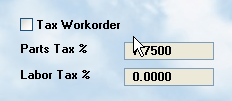
The General tab of the workorder displays the currently applied:
•Parts tax rate
•Labor tax rate
The exact percentages are shown directly on the screen.
These values are initially obtained from the:
•Client record
•System defaults
•Selected tax tables
Changing Tax Rates for One Workorder
If a special tax rate should apply only to the current workorder:
1.Click the lookup icon next to the tax rate.
2.Select the desired rate from the popup list.
3.Press Save.
This changes the tax calculation only for the current workorder.
If the client should always receive the alternate rate, modify the Client record instead.
Recalculating Totals
If parts or labor have already been added before changing tax settings:
1.Go to the Totals tab.
2.Recalculate the workorder totals.
This ensures all tax amounts are updated correctly.
Important Guidelines
Always Use the Lookup List
Never manually type tax percentages directly into the workorder.
Always use the lookup list when selecting tax rates.
If the correct rate does not exist:
•Add it in Datamanager
•Then select it from the list
This ensures:
•Consistent reporting
•Accurate calculations
•Proper validation
•Correct accounting integration
Tax Flexibility
MLS 2026 allows tax handling at multiple levels:
Area |
Purpose |
Client Record |
Exemptions or alternate default rates |
Inventory Record |
Taxable/non-taxable part control |
Labor Entry |
Taxable labor control |
Workorder Header |
Override rates for one invoice |
Tax Tables |
Maintain approved rates |
This layered design provides flexibility while maintaining accounting accuracy.
Best Practice
Sales tax laws vary significantly by:
•State
•Province
•Municipality
•Service type
•Client classification
Always consult your:
•Accountant
•Tax advisor
•State taxing authority
to determine the proper handling of taxable services and products for your location.
MLS 2026 provides the tools to apply the tax rules correctly, but the responsibility for compliance belongs to the business operator.