
When MasterLink Shop Writer 2026 starts, the Main Menu screen is displayed. From this central location, you can access virtually every feature and operational area of the system using the buttons located on the toolbar across the top of the screen.
MLS 2026 is designed around a consistent operating principle:
Select the desired operation from the toolbar, then work within the screen that opens.
Most program functions are launched using these toolbar buttons.
Understanding The Toolbar System
Many toolbar buttons perform a direct action when clicked.
However, buttons that display a small down-arrow on the right side contain:
•drop down menus
•additional options
•submenus
•grouped utilities
Selecting these buttons will display the available operations for that category.
Some menus contain multiple levels of submenus, allowing rapid access directly to specific tasks.
Example Of Drop Down Menus
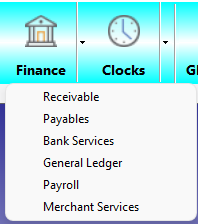 The Finance button includes options such as:
•Accounts Receivable
•Accounts Payable
•General Ledger
•Payroll
•Banking
•Merchant Services
The Tools button includes:
•Setup
•Lists
•Utilities
•Maintenance Functions
•Integration Setup
Both Setup and Lists contain their own submenus with many additional options.
This structure allows MLS 2026 to provide access to a very large number of functions while keeping the main toolbar clean and organized.
Navigating The Program
As you move throughout MLS 2026:
•each major screen often contains its own toolbar
•related functions are grouped together
•utilities remain close to the work being performed
This creates a consistent operating environment throughout the program.
Once you become familiar with the toolbar structure, navigation through MLS becomes very fast and intuitive.
Main Toolbar Operations
The primary operations available from the Main Menu toolbar are summarized below.
Orders
All workorder related activities are accessed from this section.
Use Orders to:
•create workorders
•edit existing tickets
•review completed work
•create estimates
•process invoices
•review service history
This is the primary operational area for daily service processing.
Client
All Client and Service Unit management functions are located here.
This section includes:
•client records
•service unit records
•service history
•preventative maintenance schedules
•CRM features
•marketing tools
•follow up systems
Parts
The Parts section manages all inventory operations including:
•inventory editing
•purchase orders
•stock input
•pricing utilities
•returns
•core tracking
•inventory reports
•maintenance utilities
ToDo
MLS automatically generates daily ToDo items based on:
•appointments
•PM schedules
•follow ups
•reminders
•pending activities
This helps staff organize daily operational tasks.
Appointments
The Appointment Scheduler provides:
•multi-user scheduling
•client and service unit assignments
•quote integration
•reminders
•recurring appointments
•detailed scheduling management
Appointments may also automatically create workorders when clients arrive.
Quote
The Quote system allows rapid preparation of:
•estimates
•labor pricing
•parts quotations
•saved repair packages
Quotes may be attached directly to appointments and later transferred automatically into workorders.
Finance
The Finance menu contains all accounting operations including:
•Accounts Receivable
•Accounts Payable
•General Ledger
•Payroll
•Banking
•Merchant Services
These options are accessed through the Finance drop down menu.
Clocks
MLS includes:
•employee time clocks
•labor tracking clocks
•downtime tracking
•technician time monitoring
These features assist with productivity tracking and payroll operations.
Glossary
The Glossary section manages:
•labor operations
•parts kits
•canned jobs
•labor descriptions
•pick lists
•pricing structures
•labor history
These tools help standardize work processing throughout the business.
Notes
The Notebook system allows users to maintain:
•operational notes
•repair procedures
•service information
•reference material
•technical information
•images and diagrams
The notebook may be accessed from any workstation.
Phone
The Phone Directory stores:
•personal contacts
•non-client numbers
•vendor references
•categorized phone listings
This section also references dialing features where supported.
MMC
The MasterLink Message Center (MMC) provides:
•internal staff communication
•electronic messaging
•phone message tracking
•operational notes
•user-to-user communication
This is especially useful in busy shop environments.
Tools
The Tools section contains:
•system setup
•maintenance utilities
•list editing
•indexing
•integration setup
•file maintenance
•system configuration
•diagnostic utilities
Many advanced administrative functions are located here.
Help
The Help button opens the MLS 2026 manual.
In addition:
Pressing F1 from any screen automatically opens the documentation directly to the reference page for the current screen.
This provides extremely fast access to help information while working.
Exit
The Exit button closes MasterLink Shop Writer 2026.
Always verify:
•work has been saved
•processing is complete
•printing operations are finished
before exiting the program.
Helpful Operating Tips
•Explore the drop down menus to become familiar with available features
•Many functions are grouped logically by operational area
•Toolbars are designed to reduce repetitive navigation
•Most screens follow the same operational pattern:
oAdd
oEdit
oSave
oDelete
oSearch
oReports
oExit
•Use F1 frequently while learning the system
•Read prompt messages shown at the bottom of windows
As you become familiar with the toolbar and menu structure, operating MLS 2026 becomes fast, efficient, and highly intuitive.
[TEditFormControlObj]